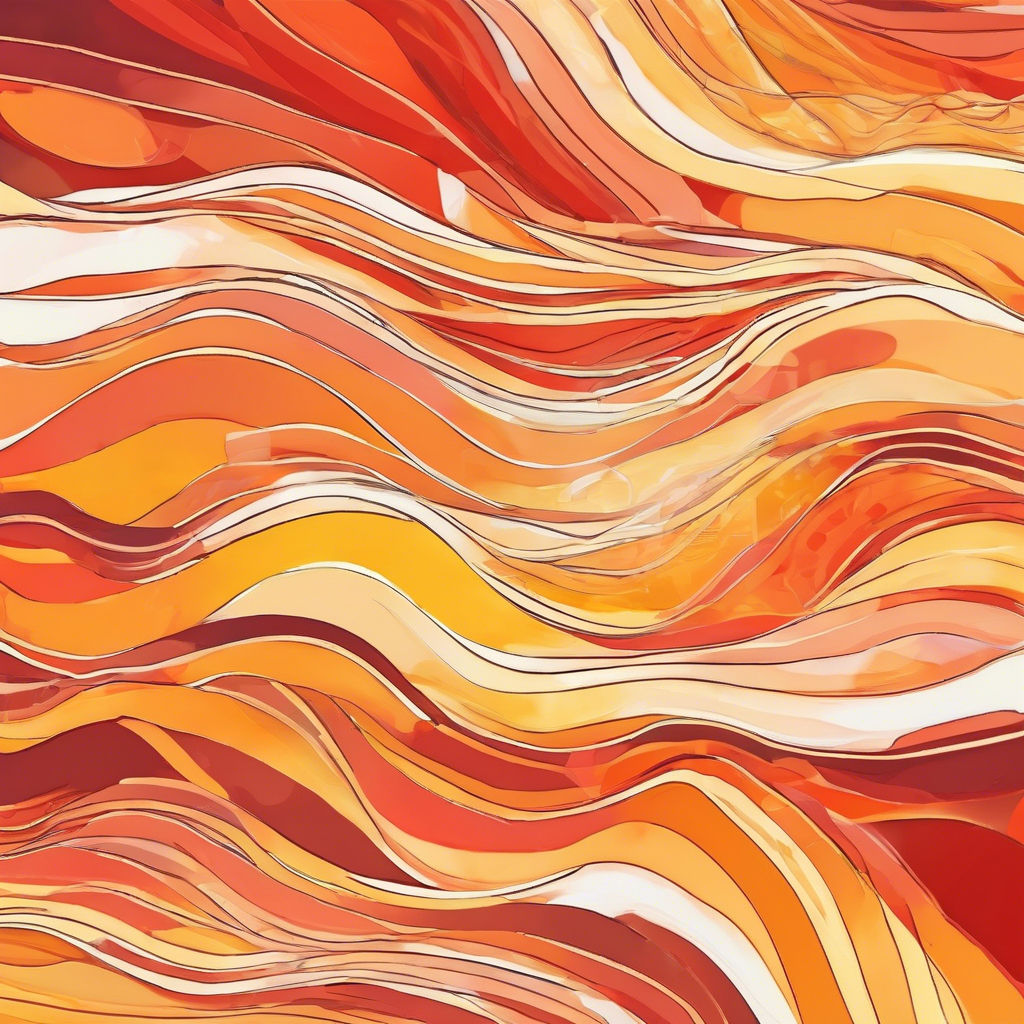

Making Still Life Abstract: Finding Structure, Shape and Surprise

Still life has long been one of the most valuable subjects for artists. A simple arrangement of everyday objects gives us a chance to explore composition, colour, line, tone and mark making without the pressure of capturing movement or likeness. But what happens when we stop trying to paint objects exactly as they appear and instead begin to reinterpret them?
In my last studio class, we explored abstract still life — taking familiar objects and transforming them into something more expressive, layered and unexpected.
The results were bold, individual and full of personality.
From bottles and bowls to fruit and kitchen objects, students worked from observation but gave themselves permission to move beyond realism.

Starting with Observation
The project began in a fairly traditional way.
Students arranged a simple still life setup and spent time looking carefully at the relationships between objects rather than the objects themselves. Instead of asking:
How do I paint this bottle?
we asked:
What shapes does it create?
Where do lines overlap?
How can the negative spaces become part of the composition?
What happens if objects merge into one another?
This shift in thinking is often where abstraction begins.
When drawing from observation, it can be tempting to focus entirely on accuracy. But abstraction invites us to notice something different — rhythm, balance, repetition and visual movement.
Breaking Objects Apart
Once the basic arrangement was established, students began simplifying.
Rather than rendering every detail, they reduced objects into:
Large flat shapes
Strong outlines
Repeating patterns
Geometric sections
Colour blocks
A lemon became a bright oval of colour.
A bottle became an elegant vertical shape.
The spaces around the objects became just as important as the objects themselves.
This stage often feels uncomfortable at first because we naturally want to “correct” things and make them realistic. But the aim was not to lose the still life completely — it was to stretch it.
Keeping one or two recognisable elements allows the viewer to remain connected while enjoying the freedom of abstraction.

Using Layers to Build Interest
One of the most enjoyable parts of this project was introducing layers.
Students experimented with adding:
Patterned areas
Printed textures
Transparent colour
Drawn line over paint
Contrasting marks
Layering creates visual history within the painting. Some areas become quiet and calm while others draw attention.
You can also see how abstract still life gives permission for different styles to coexist. A realistic lemon might sit beside a patterned background. A carefully painted object might overlap with expressive marks.
That contrast creates energy.
Colour as a Creative Decision
Colour becomes especially exciting when working abstractly.
Instead of matching reality, students selected colours to support the composition.
Warm oranges and reds created focal points.
Cool greys and blues balanced the surface.
Small areas of bright colour acted as visual anchors.
One useful exercise is to ask:
If the object disappeared, would the painting still work?
When colour relationships become more important than the objects themselves, the work starts to move into abstraction.
Embracing Imperfection
One thing that often comes up in class is the idea that abstraction should feel effortless.
In reality, abstract work asks us to make more decisions, not fewer.
Every line matters.
Every shape affects balance.
Every colour changes the mood.
There is often a stage where the painting feels awkward or unresolved. That is usually the moment to keep going rather than stop.
Students adjusted edges, simplified areas and sometimes painted over sections entirely.
The strongest outcomes came from responding to what the painting needed rather than staying loyal to the original setup.

Why Still Life Is Such a Good Starting Point for Abstraction
Still life gives us enough structure to begin, while leaving plenty of room to experiment.
You already have:
A subject
A composition
Light and shape
From there, abstraction allows you to ask what if?
What if the objects overlap?
What if the background comes forward?
What if pattern replaces detail?
What if colour becomes the subject?
That combination of observation and freedom makes still life one of the most rewarding ways to explore abstract art.
This studio project produced a wonderful range of outcomes, all from the same starting point — proof that abstraction is less about copying what you see and more about discovering new ways to respond to it.
If you’re trying this approach yourself, start simple, stay curious and allow the painting to change as you work. You may end up somewhere completely unexpected — and that’s often where the most interesting paintings begin.
Would you enjoy learning this approach step by step? I'm thinking about creating an online tutorial based on this abstract still life project, taking you through the process from observation to a finished painting. If that's something you'd be interested in, I'd love to hear from you. Leave a comment below or get in touch—your feedback will help me decide whether to add it to the online school.


Comments